
Perimenopause
Can I Be in Perimenopause if I Still Have Periods
Can you be in perimenopause while still having periods? Learn which changes to discuss, when testing may help, and why unusual bleeding needs attention.
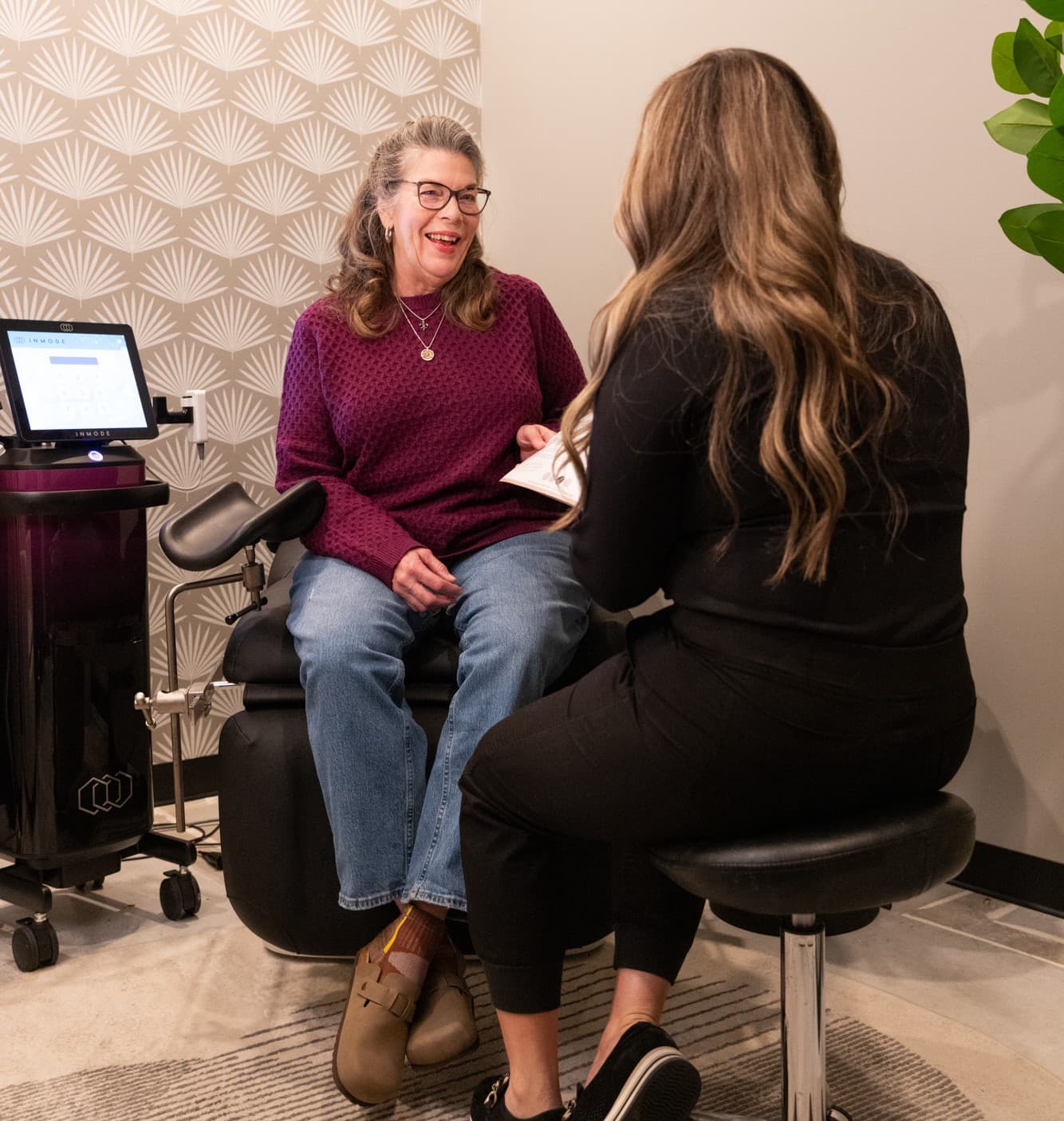
You are still having periods, so menopause seems like something to think about later. Yet your sleep has changed, you sometimes wake up sweaty, and your cycle no longer follows the schedule you knew for years. You can be in perimenopause while you still have periods. Perimenopause is the transition leading up to menopause, and menstrual bleeding often continues during that time.
That does not mean every new symptom is caused by hormones. It means that continuing to have periods should not prevent a conversation about this stage of life. The SONARA Studio’s menopause care is a place to explore questions about symptoms and available services before deciding what kind of care you need.
What perimenopause means for your cycle
During the menopausal transition, your cycle may become less predictable. Periods can arrive closer together or farther apart, and the amount of bleeding can change. The Mayo Clinic overview of perimenopause explains the difference between the transition and menopause itself. Natural menopause is generally identified after 12 months without a period, when another cause does not explain the absence of bleeding.
The change is not always obvious from one month to the next. You might still bleed every month but notice that your usual pattern has shifted. Hormonal contraception can also change bleeding and make the picture harder to interpret. Tell your clinician what is usual for you, what is different now, and whether you use birth control or other hormone medication.
Symptoms are easier to discuss when you describe the pattern
Hot flashes are familiar, but sleep difficulties, mood changes, and vaginal discomfort may also occur during this transition. The Cleveland Clinic explains that perimenopause symptoms vary and can affect everyday life. You do not need to experience every symptom on a list for your concerns to deserve a visit.
Try recording a few details for several weeks: when your period starts, when sleep is interrupted, and which symptoms interfere with work or home life. “I wake up sweaty three nights a week and struggle to concentrate the next day” gives a provider something specific to investigate. A calendar also helps you avoid relying only on how you feel on the day of the appointment.
Do you need bloodwork to know if you are in Perimenopause?
Not necessarily. ACOG explains that hormone testing is often unnecessary during perimenopause. Age, symptoms, and changes in menstrual bleeding often guide the assessment. Testing may be considered in certain situations, including menstrual changes before age 45, particularly before age 40. A lab result should answer a clinical question rather than serve as a pass-or-fail test for how you feel.
Hearing “your labs are normal” can feel dismissive when you are still losing sleep, having hot flashes, or struggling to feel like yourself. A result within the reference range does not automatically mean that everything is fine. MedlinePlus explains that normal lab results do not always guarantee good health. Your symptoms and medical history still deserve attention, even when nothing on the report is flagged.

A reference range is not a personalized measure of how well you feel. That does not mean there is one “optimal” hormone number to chase. A thoughtful assessment looks beyond flagged results and considers your cycle, symptoms, and other possible causes. If the conversation ends at “normal,” ask, “What could explain how I feel, and what should we do next?”
If you are discussing The SONARA Studio’s hormone therapy services, ask what any proposed tests would clarify and how the results would change your care. A clinician may also consider other explanations for your symptoms. You should leave understanding the reasoning behind a recommendation, whether the next step involves testing, treatment, follow-up, or another provider.
Bleeding changes still need attention
It is easy to dismiss heavier bleeding as part of getting older, especially when other symptoms seem to fit perimenopause. However, ACOG advises discussing abnormal bleeding around menopause with an OB/GYN. Bleeding between periods, bleeding after sex, unusually heavy or prolonged periods, and any bleeding after menopause need evaluation. A likely life-stage explanation should not replace that assessment.
Pregnancy can also still happen during perimenopause. If pregnancy is not your goal, ask your clinician about contraception rather than assuming irregular periods mean you no longer need it. If bleeding is heavy and you feel faint, short of breath, or severely unwell, seek urgent medical care.
Focus the visit on the change that matters most
It can be hard to explain a collection of symptoms that seem unrelated. Instead of trying to remember everything in order, start with the change that affects your life most. Perhaps you can manage an occasional hot flash, but waking repeatedly has made your workday much harder. Perhaps your periods are manageable, but vaginal discomfort is affecting intimacy. Give the provider that context before working through the rest of your notes.
Include what you have already tried and what happened afterward. Bring the names of medicines and supplements, along with any previous test results you have been given. If a friend has recommended a treatment, you can ask about it without assuming it is right for you. The important question is how an option fits your symptoms and health history, rather than whether it helped someone else.
A useful treatment conversation includes follow-up
You do not need to arrive having chosen hormone therapy or ruled it out. Ask the clinician which options address your particular concern and why they are recommending one approach. If medication is discussed, ask about the expected benefits, potential side effects, alternatives, and when the response would be reviewed. The same questions are helpful when the recommendation involves a change in daily habits or a referral.
Be clear about your preferences and practical concerns. You may want to begin with the symptom disrupting your sleep, need to understand ongoing costs, or feel unsure about a treatment you have heard described in conflicting ways. Those questions belong in the appointment. You should be able to explain the purpose of the plan in your own words when you leave.

Decide how you will keep track of changes between visits. A short note about sleep, bleeding, or discomfort can be easier to maintain than an elaborate daily log. Ask what would be a reason to contact the office before the scheduled review. Perimenopause can involve changing symptoms, so a plan should include room to reassess what is helping and what needs a different explanation.
If an appointment feels rushed, ask which concerns can be addressed that day and which need a separate visit. Bleeding changes, sleep difficulties, and treatment questions may each need attention. Keeping a short written list helps ensure the issue that brought you in does not get lost in the conversation.
You do not have to wait for your periods to stop
The purpose of an appointment is to understand what is happening and what might help, not to prove that you have reached a particular milestone. Bring your symptom notes, medication list, and the questions that are hardest to ask. Tell the provider which change matters most to you, whether that is sleep, comfort during intimacy, or getting through the workday.
You can find a SONARA Studio location to discuss available care and whether a consultation fits your needs.